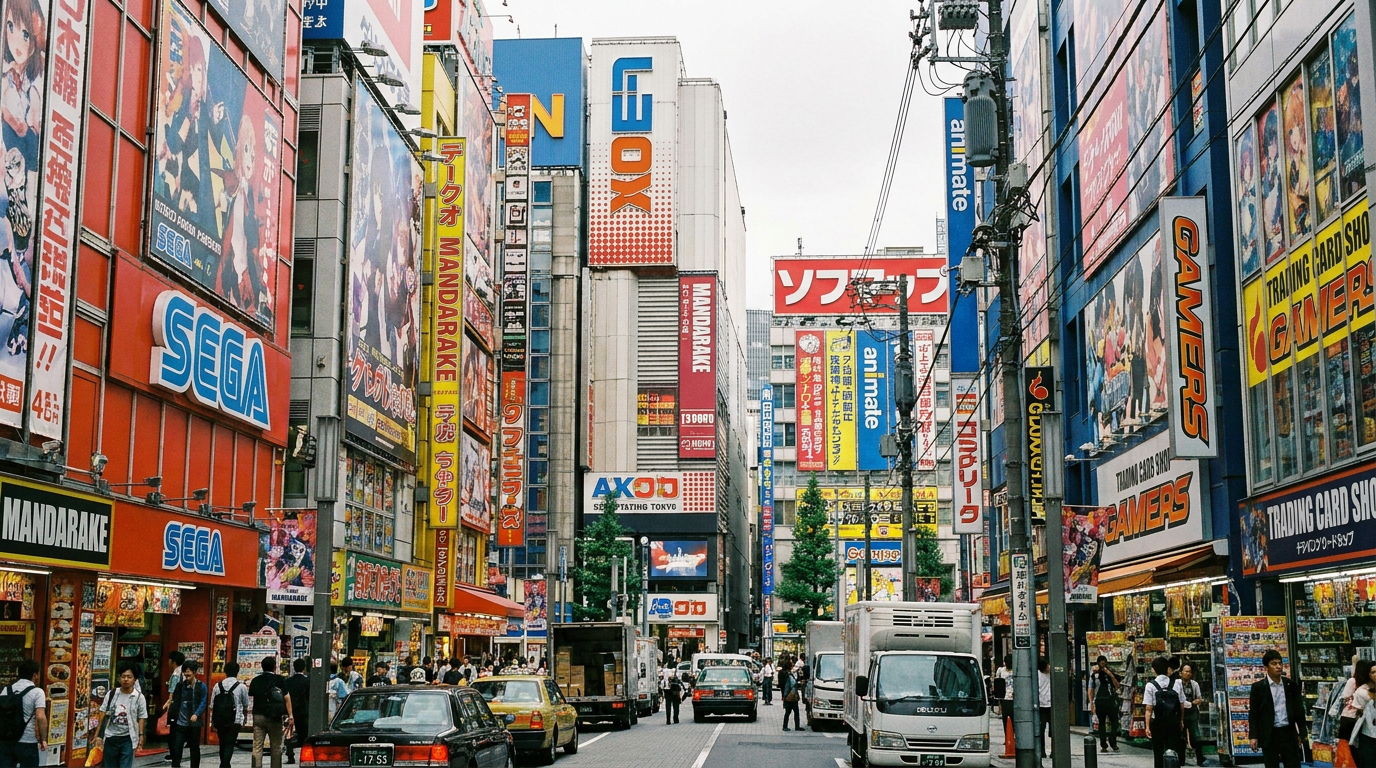
I've walked Akihabara's streets probably 200 times over the past decade. The first time, I was overwhelmed. Neon signs, eight-storey buildings full of cards, staff shouting prices in Japanese I couldn't understand. I walked out with a random booster box and a vague sense I'd overpaid.
Ten years and several hundred visits later, I know exactly which floors to hit, which shops quietly discount their stock, and where the vintage cards actually are (hint: not where you'd expect). This is the guide I wish someone had handed me on that first trip.
The Geography of Akihabara Card Shops
Akihabara's card shops cluster in two zones, and understanding this saves you hours of wandering.
South Akihabara (Electric Town Exit side) is where most tourists end up. Radio Kaikan, the multi-floor hobbyist building, anchors this area. Card Lab sits on the 9th floor, Yellow Submarine on the 6th, and BigMagic also on the 9th. These are reliable, well-stocked stores where you'll find current sets, competitive singles, and a decent range of supplies.
North Akihabara (Suehirocho Station side) is where things get interesting. This is where Hareruya 2 operates its massive multi-floor operation, where magi runs its grading-focused store, and where the smaller independent shops hide in side streets. If you're hunting vintage, this is your zone.
The walk between them takes about 10 minutes, but most tourists never make it north of Kanda River. That's where the deals are.
When to Go (This Actually Matters)
Timing your visit can be the difference between a relaxed browse and a shoulder-to-shoulder scrum through narrow aisles.
- Weekday mornings (10-11 AM): Best time, period. Most stores open at 10 or 11 AM. You'll have display cases to yourself. Staff have time to answer questions and pull stock from the back. I've been shown unlisted vintage cards simply because I was the only customer and the staff member wanted to chat.
- Weekday afternoons (2-5 PM): Still manageable. Tournament players start filtering in after 3 PM, especially at Hareruya stores.
- Weekends: Avoid if possible. Radio Kaikan gets genuinely packed. Lines form for the elevator. Display cases are three-deep with browsers. If weekends are your only option, arrive at opening.
- Holidays & new set release days: Chaos. Queues around the block for Pokemon Center, sold-out signs everywhere. Fun to experience once, terrible for actual shopping.
The 5 Shops Most Tourists Miss
1. Amenity Dream (Cash Only, check closing days before visiting)
Tucked in a side street north of the main drag, Amenity Dream is easy to walk past. The entrance is narrow, the signage is minimal, and it has irregular closing days (check before you go). But their prices on singles consistently undercut Radio Kaikan shops by 10-15%. They only accept cash, so hit an ATM first. The staff don't speak much English, but point at what you want and they'll pull it out.
2. Card Rush (Discount Display Cases)
Card Rush has something most Akihabara shops don't: clearly marked discount displays. Their 50% off case rotates stock regularly, and I've found near-mint Alt Art cards in there that were priced at full retail two streets away. It's not always gold, but it's always worth checking.
3. Fullcomp Akihabara
Primarily a retro gaming store, but their card section is surprisingly good. They price vintage Pokemon cards lower than dedicated card shops because cards aren't their core business. I picked up a Fossil set Dragonite holo here for 40% less than Mandarake was asking.
4. Surugaya Akihabara Card Floor
Surugaya is known as a secondhand goods chain, not a card specialist. That reputation works in your favour. Their buyback prices are competitive (good if you're selling), and their retail prices on singles reflect "used goods" rather than "collectible card" market rates. Always check the junk bins.
5. magi Akihabara
If you're specifically hunting graded cards — PSA, BGS, or the increasingly popular ARS — magi is the only store in Akihabara that treats grading as its primary business. They have a dedicated graded card submission desk and a massive display of slabbed cards. Prices aren't cheap, but the selection is unmatched.
Price Comparison: What Things Actually Cost
To give you a real sense of pricing, here's the kind of variation you'll typically see across shops:
Akihabara Price Snapshot
Chase SARs: Price range across 6 shops typically varied by 20-30%. Amenity Dream consistently had the best prices.
Mid-range singles: Prices varied up to 40% between shops. Card Rush discount cases offered the best value.
Sealed booster boxes: Surugaya consistently cheapest, Radio Kaikan shops typically charge a small premium for convenience.
Vintage holos: Prices vary significantly by condition. Mandarake and magi had the best selection and most trustworthy grading.
The takeaway: prices vary 20-40% between shops for the same card. Checking three or four shops before buying isn't just smart, it's necessary.
Negotiation: Can You Haggle?
Short answer: generally no. Japanese card shops have fixed prices. But there are exceptions.
If you're buying multiple high-value cards from the same shop, politely asking "Is there a discount for buying together?" (matomete kau to yasuku narimasuka? / まとめて買うと安くなりますか?) sometimes works at independent shops. I've had 5-10% knocked off a few times at smaller stores. Chain stores like Hareruya and Yellow Submarine won't budge.
What does work everywhere is tax-free shopping. Most major stores offer tax-free purchases for tourists spending over the minimum threshold. That's an instant 10% saving. Bring your passport.
The best deal in Akihabara isn't a specific shop — it's visiting on a weekday morning with your passport, checking three stores before buying, and knowing where the discount bins are.
My Recommended Route
If you have 4-5 hours (and you should allow at least that), here's my optimised order:
- 10:00 AM — Start at Radio Kaikan (opens 10 AM). Card Lab 9F, Yellow Submarine 6F. Get a sense of baseline prices.
- 11:00 AM — Walk north to Hareruya 2. Browse their vintage floor and tournament singles.
- 12:00 PM — Lunch break. The ramen shops on Suehirocho side are better and cheaper than the tourist strip.
- 1:00 PM — Amenity Dream (opens around noon, confirm hours before visiting). Then Card Rush and Surugaya.
- 2:30 PM — magi for graded cards. Fullcomp for a final sweep.
- 3:30 PM — Return to whichever shop had the best price on items you spotted earlier. Buy.
This route is also available as an interactive map in the Tokyo Directory Store Crawl Routes section.